
 EN
EN
 ar
ar bg
bg hr
hr cs
cs da
da nl
nl fi
fi fr
fr de
de el
el hi
hi it
it ko
ko no
no pl
pl pt
pt ro
ro ru
ru es
es sv
sv tl
tl iw
iw id
id lv
lv lt
lt sr
sr sk
sk sl
sl uk
uk vi
vi et
et hu
hu th
th tr
tr fa
fa ms
ms hy
hy ka
ka ur
ur bn
bn mn
mn ta
ta kk
kk uz
uz ku
ku
Real-Time Dam Safety Alerts with Differential Pressure Water Level Sensors
Key Takeaways An alert chain needs more than a sensor: define field in...

Ambient Temperature Sensor Resistance: Selection & Compatibility
When evaluating an ambient temperature sensor, the resistance value matters more than it first appears. Different sensor types—thermistors, RTDs, even silicon-based ICs—deliver distinct resistance-versus-temperature curves. Pick the wrong one, and your readings might drift, become noisy, or require signal conditioning your data logger can’t handle. Here, we look at how common ambient temperature sensors behave in terms of resistance: NTC thermistors with their steep negative temperature coefficient, platinum RTDs that stay nearly linear, and the conditioning circuits they need. Once you understand the numbers behind the data sheet, you can quickly tell whether a given sensor will work with your existing setup, without having to re-derive the voltage-divider math from scratch.
Technical Detail
When a project spans temperatures from a -40°C cold store to a 125°C industrial enclosure, the resistance of your ambient temperature sensor directly affects accuracy and wiring cost. Common NTC thermistors come in nominal resistances like 2.252 kΩ, 10 kΩ, or 100 kΩ at 25°C, but the B-constant is just as important—it sets how steeply resistance changes with temperature. For example, a 10 kΩ NTC with B=3435 shows near 27 kΩ at 0°C and drops to about 3.6 kΩ at 50°C. That nonlinearity can stress a simple ADC sampling circuit and requires careful linearization. If the system needs high precision and long-term stability, platinum RTDs such as Pt100 or Pt1000 often fit better. Their temperature coefficient is around 0.385%/°C, and standard tables give the resistance at any temperature; using three- or four-wire connections removes lead resistance errors. Kingmach packages these sensing elements into weatherproof housings for geotechnical and industrial monitoring, with options for voltage or current output that connect directly to PLCs or data acquisition modules. When you choose, consider the sensor’s nominal resistance and tolerance against the input impedance of your logger—if the logger’s impedance is only 10 kΩ, a 100 kΩ thermistor will introduce noticeable shunt error. Our support team can recommend resistance ranges and whether a constant-current drive makes sense, based on your cable run length, supply voltage, and target resolution.
News
Key Takeaways An alert chain needs more than a sensor: define field in...
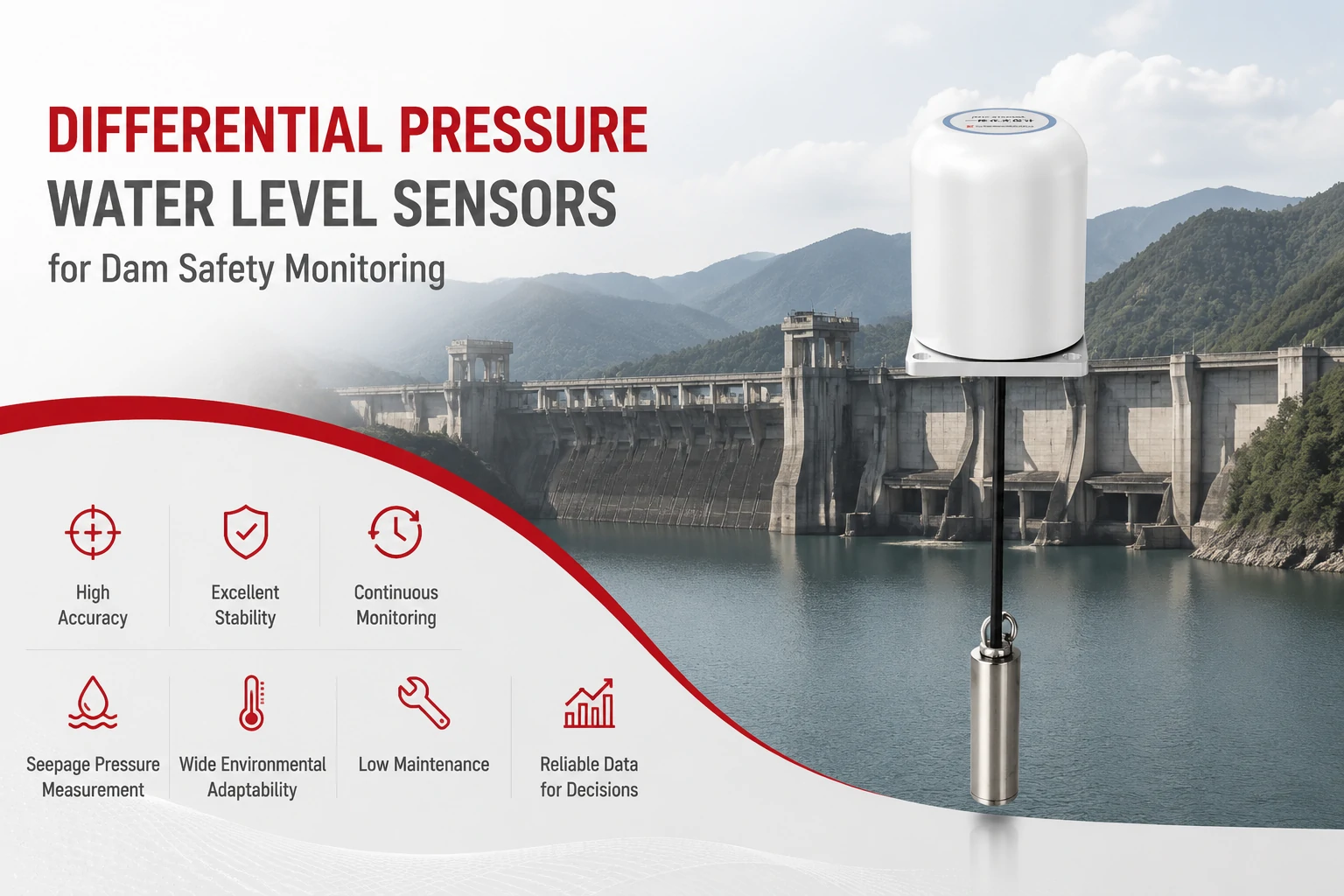
Key Takeaways The strongest fit is usually a confined, submerged, or s...
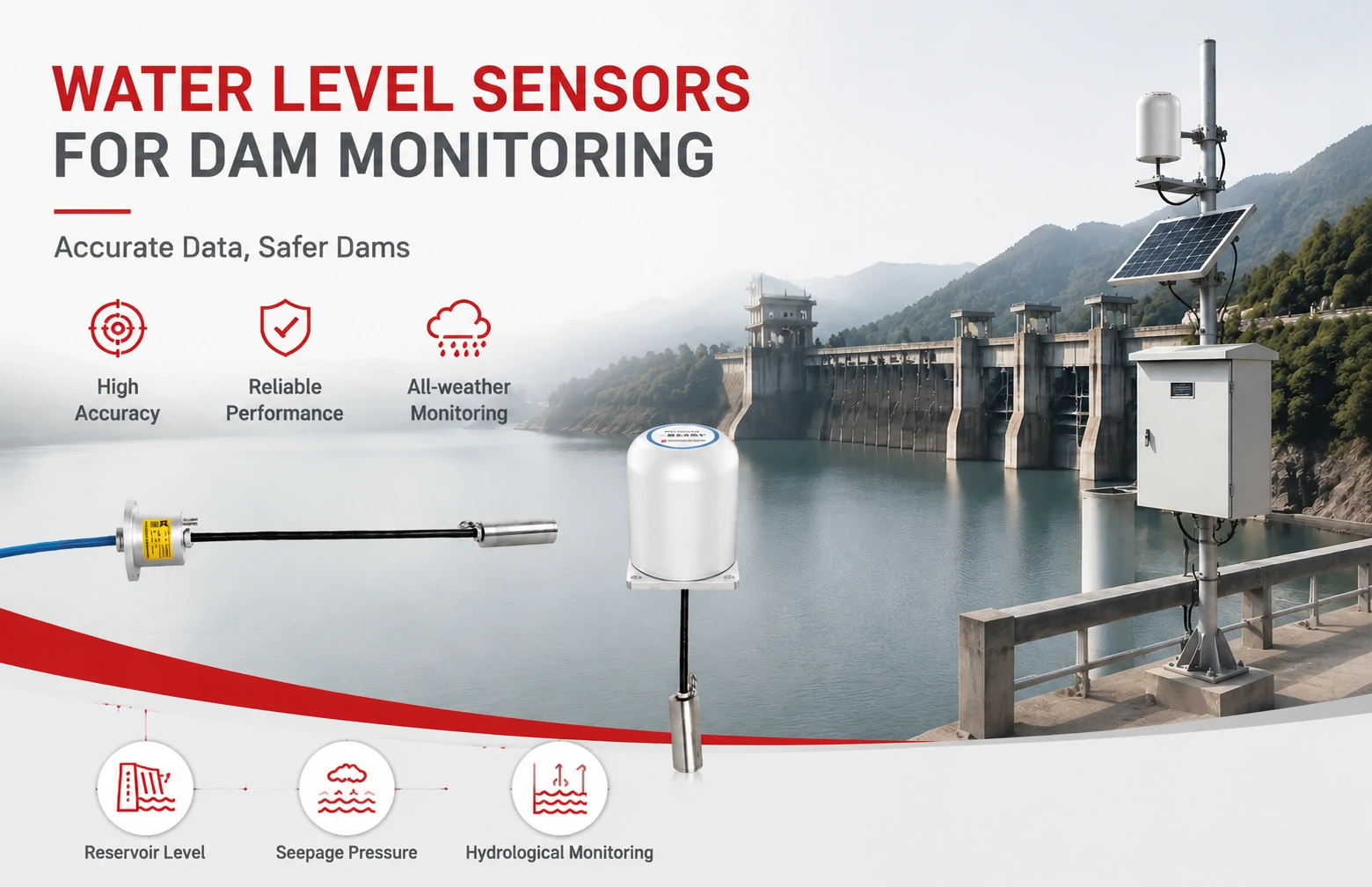
Kingmach Water Level Sensors for Dam Monitoring: A Buyer's Guide to Differential Pre...
Products
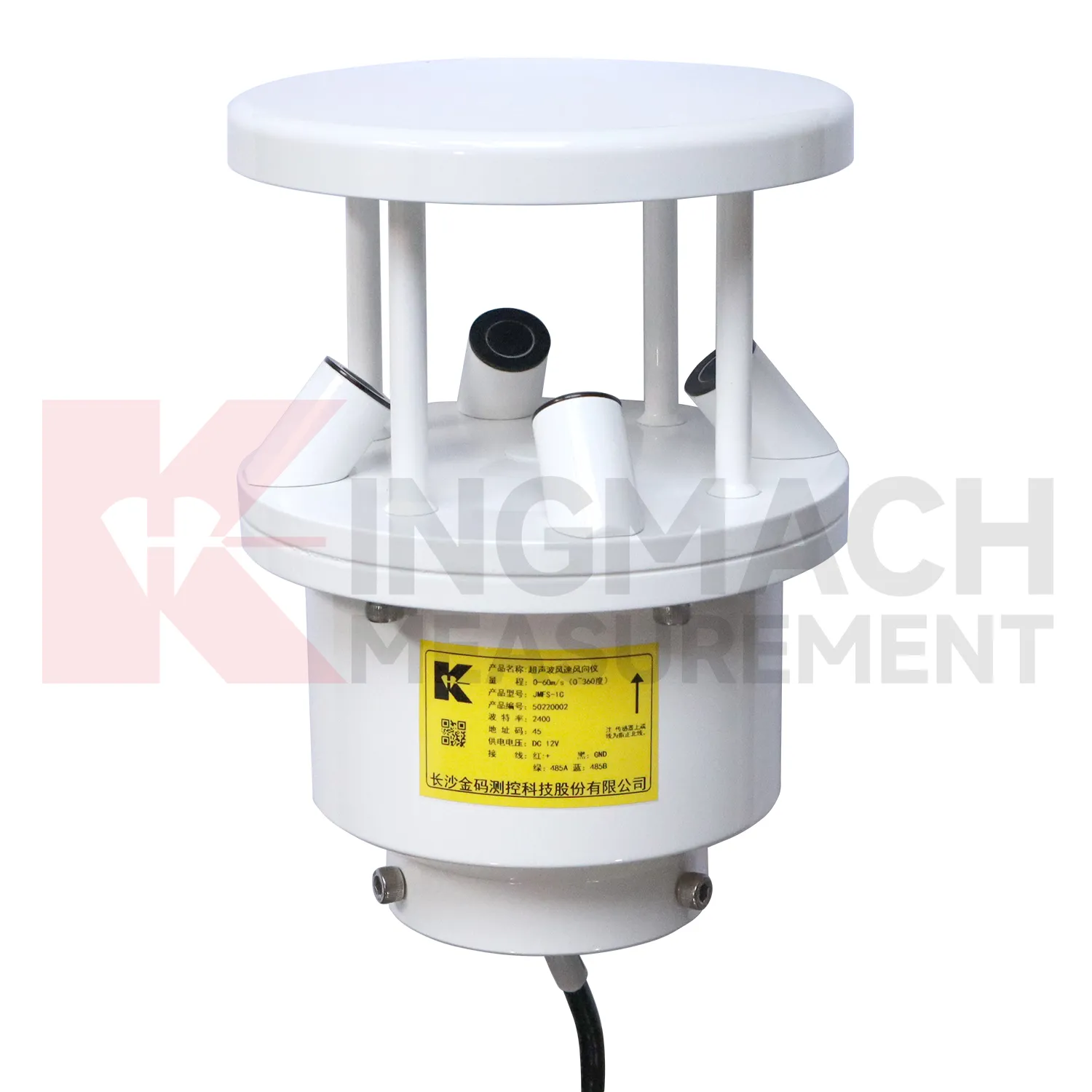
Ultrasonic Wind Speed and Direction Sensor JMFS-1C
View DetailsFAQ
With a simple single-ended voltage divider, a 10-bit ADC at 0–5 V gives about 4.9 mV per count. For a 10 kΩ NTC with B=3435, the voltage change around 60°C becomes very small—just a few ADC counts—so accuracy suffers. Consider adding an external op-amp for gain or switching to a Pt1000 with a constant current source; its more linear resistance at higher temperatures makes signal amplification easier.
Platinum RTDs generally show better long-term stability than NTC thermistors. NTC materials can drift slightly under humidity or thermal cycling, but well-sealed, glass-encapsulated NTCs still achieve low annual drift. The trade-off often comes down to budget and how often you can recalibrate. In many geotechnical projects we work on, Pt1000 is preferred because the logger’s current-source design is simpler and multi-channel consistency is better.
If you transmit resistance directly, the copper wire’s own resistance (maybe several ohms to tens of ohms over 200 m) adds to the sensor’s resistance and creates error. For sensors in the kilo-ohm range this may be tolerable, but for a low-resistance Pt100 it can dominate. A 4–20 mA current loop is a common solution, or you can integrate a transmitter to convert resistance to current or voltage at the sensor head. Kingmach supplies temperature probes with built-in 4–20 mA output that suit most industrial input cards.
First, see what the module accepts: 0–10 V, 4–20 mA, or direct RTD/thermistor inputs. Many PLC modules with RTD channels support Pt100/Pt1000 and perform internal linearization. If you only have voltage inputs, a voltage divider can convert the thermistor’s resistance to voltage, but you need to account for the divider resistor’s temperature coefficient and the ADC input impedance. Compare the sensor’s output range—resistance or voltage—against the module’s range. We can provide wiring diagrams and reference circuits for common setups.
Standard values like 10 kΩ or 100 kΩ at 25°C are readily available, but if you need a specific B-constant or tighter tolerance, we work with thermistor manufacturers who can handle custom resistance, B-value, and accuracy—though minimum order quantities may apply. As an alternative, we often recommend integrating a microcontroller at the sensor for local linearization and digital output (Modbus RTU, for example). That simplifies compatibility on the data-collection side.
Share your product type, target capacity, and application requirements. Our team can review the details and recommend a practical next step.
If you are interested in our products or want to become our partner.
Please leave your contact information, our team will contact you as soon as possible.
Mail: [email protected]
Contact Us: +8613808434127
Address: No. 188 Tongzipo West Rd, Changsha, Hunan, China